Ethical leadership and corporate citizenship
In line with our values statement, the university's leadership at all levels of governance and management is based on integrity.
While we remain fairly confident that all governance and management structures at the NWU continue to strive for sustainable economic, social and environmental performance, we are also aware that negative consequences might arise from decisions taken at the university.
This necessitates that we create an environment conducive to countering any possible negative outputs on financial, societal and environmental practices.
The Social and Ethics Committee of Council fulfils an important role in advising Council on all matters relevant to ethical leadership and corporate citizenship. This approach positions the NWU to fulfil its responsibility in terms of the environmental impact of its behaviour and supports value creation to its stakeholder communities.
Behavioural manual for staff
The NWU is committed to harmonious workplace relations, fair labour practices, mutual respect, fairness and effective operations. To give effect to this, the NWU has a Behavioural Manual which is governed by the Behavioural Policy.
What happened
Disciplinary action was taken against 36 employees across the NWU in 2020. 25 cases were of such a serious nature that university hearings were held where dismissals could be the appropriate sanction.
Only four employees had their services summarily terminated while a mutual separation agreement was reached with one employee who resigned. In the rest of the cases, written warnings were imposed.
Eleven CCMA cases were dealt with successfully.
Matters reported by employees or the public
In line with the Policy on the Reporting of Maladministration and Irregularities and the Protection of Disclosure, a number of reports were received via reporting boxes placed on the campuses.
What happened
Five reports were received via the reporting boxes, and for all these cases, an official case was opened in each instance for further investigation by Internal Audit. This compares to the six cases opened in 2019 after reports of alleged irregularities. The other investigations were received via internal requests and/or referral.
Ombud office for language
The approach of the Language Directorate is to resolve language matters directly or as close as possible to the point where they originate and not to allow them to escalate.
Reporting can be done to the Ombudsman in the Language Directorate via any of the NWU reporting channels or directly via email to the Ombud. Reported matters are investigated, resolved and reported on.
Ongoing investigations
Internal Audit plays an important role in the ongoing investigation of suspected irregularities.
What happened
Of the investigations reported in 2019, 31 were completed, while 13 were in progress. In 2020 a total of 11 investigations were completed and 20 are still currently being investigated.
Over the year, there has been a significant increase in procurement-related matters reported.
Dealing with sexual harassment
The NWU is committed to creating a safe working environment free from the fear of sexual harassment.
What happened
One case of sexual harassment was reported. Disciplinary action was taken against the employee and will be finalised early in 2021.

Fighting fraud
After the verification of facts, Internal Audit handed several investigations over to prosecuting authorities, and various fraud awareness sessions were held on the campuses.
What happened
During the past two years, investigations about personal expenditure/misrepresentation of invoices/changes of bank details were handed over to the South African Police Service (SAPS). In 2019, the amount/estimate involved was R70 563.
During the pandemic of 2020 there have been challenges in reporting cases to law enforcement, as well as with the progress of cases reported. These challenges were as a result of the hard national lockdown, after which various law enforcement offices were repeatedly closed owing to positive Covid-19 cases among personnel.
Challenges were also encountered with the handover/delegation of cases to new responsible officers, and with files that went missing. In 2020 investigations, the cases handed over to SAPS had an estimated value of R51 000.
In line with the university's Anti-Fraud Strategy and given the Covid-19 regulations, online anti-fraud awareness sessions were held. One of these sessions took place during November 2020 in support of Fraud Awareness Week and was presented by the Association of Certified Fraud Examiners (ACFE).
The Anti-Fraud Strategy calls for a specific focus on Internal Audit's proactive and continuous monitoring of transactions relating to procurement. Various tests are run and continually reported on to operational managers for follow-up. This has to a large extent assisted to mitigated the risk of fraud in this regard.
Compliance with laws and regulations
The Compliance Committee, which is a subcommittee of the University Management Committee (UMC), coordinates and reports on all compliance activities. The UMC then submits reports to the Audit, Risk and Compliance Committee whose duty it is to report accordingly to Council.
What happened
During a compliance assessment in 2020, compliance with the following pieces of legislation was self-assessed:
National Student Financial Aid Scheme Act 56 of 1999; Basic Conditions of Employment Act, No 75 of 1997; Broad-Based Black Economic Empowerment Act, No 53 of 2003 and 2014 Code; Copyright Act, No 98 of 1978; Electronic Communications Act, No 36 of 2005; Financial Intelligence Centre Act, No 38 of 2001; National Building Regulations and Building Standards Act, No 103 of 1977; Occupational Health and Safety Act, No 85 of 1993; Promotion of Access to Information Act, No 2 of 2000; Prevention and Combating of Corrupt Activities Act, No 12 of 2004; Prevention of Organised Crime Act, No 121 of 1998; Compensation for Occupational Injuries and Diseases Act, No 130 of 1993; Electronic Communications and Transactions Act, No 25 of 2002; Trade Marks Act, No 194 of 1993.
The risk and compliance coordinator, a staff member who is part of the Corporate and Information Governance Services Department monitors compliance on an ongoing basis. EXCLAIM compliance software is used for compliance assessment and monitoring.
A Risk and Compliance Policy was finalised and approved by Council on 19 March 2020.
Promotion of Access to Information Act requests
The NWU subscribes fully to the Promotion of Access to Information Act (PAIA), 2 of 2000
What happened
In 2020, the information manual was updated for the 16th time and copies were sent to the South African Human Rights Commission (SAHRC).
As per PAIA, the manual is available in three languages (English, Afrikaans and Setswana) and published on an NWU web page. The manual provides information about the promotion of access to information and the protection of personal Information. The compulsory section 32 report was also delivered to the South African Human Rights Commission.
The section 32 report covered the period April 2019 to March 2020, during which 45 requests were received and 29 granted in full. 11 requests were refused in full. Three requests were refused on the basis of the mandatory protection of the personal information (section 34); one was refused based on the mandatory protection of commercial information of a third party (section 36(1)(b)); one was refused on the basis of an unreasonable diversion of resources (section 45(2)); one was refused on the basis that the records could not be found or do not exist (section 23), and five requests were refused based on the requester not using the correct platform or the request being unclear.
Providing integrated assurance
A Combined Assurance Forum (CAF) has existed at the university since 2012 and has aligned its functioning with King IV. The intention of the committee is to manage and limit the risk exposure of the university, and to provide assurance.
What happened
The NWU CAF provided an adequate and effective control environment and ensured the integrity of reports for better decision-making, while also establishing an assurance model. A risk assurance map was tabled during 2020 and will be finalised during 2021. The forum also assisted the Audit, Risk and Compliance Committee to fulfil its responsibility in giving assurance to Council.
Specifically, it provided assurance that the university’s risk management, risk control and governance processes are adequately addressed. CAF also provided a platform for discussions on optimising risk management at the NWU and addressing management concerns about the processes for managing risks.
Human rights matters
The Human Rights Committee did not deal with any human rights infringements during 2020. It reviewed the various matters that were reported to it but referred these back to the various departments involved because it did not deem them to be human rights infringements.
The committee discussed various awareness initiatives and noted that the SRC leadership structures had received training regarding human rights.
Further, the committee discussed and noted the Sexual Harassment Policy and the revised Code of Ethics of the NWU.
Institutional Forum: custodian of good governance
Together with Council, the Institutional Forum serves as the custodian of good governance and, by advising and assisting Council, helps to safeguard stakeholder value creation.
The Institutional Forum may have up to 25 members representing a broad range of internal stakeholder constituencies. Members include representatives from Council, the University Management Committee, Senate, academic staff, a recognised union, support staff, the campus student representative councils, the NWU Convocation and members with special expertise.
What happened
The Institutional Forum discussed and gave input on the draft NWU five-year Employment Equity (EE) plan and NWU Gender Based Violence Policy.
The forum (as a whole or represented by some of
our individual members) advised on the appointment
of four university management members. They are
Prof D Kgwadi (Vice-Chancellor), Ms E de Beer
(Executive Director: Finance and Facilities), Prof M
Verhoef (Registrar) and the Vice-Principal and Prof
L du Plessis
(Vice-Principal), all of whom were being
appointed for a second term.
The forum also advised the selection panels constituted to consider the appointment of the Deputy Vice-Chancellor: Research and Innovation, executive deans and deputy executive deans of NWU faculties, whose appointment was a key step in the implementation of our strategy.
Council statements
The following Council statements can be accessed here.
- Council statement on going concern
- Council statement on financial controls outside financial statements
- Council statement on financial health and viability
- Council statement on tenders
- Council statement on contract management, SLAs and monitoring of suppliers' performance
- Statement on penalties, sanctions and fines
The Institutional Forum's full report is available here.
DR BISMARK TYOBEKA
CHAIRPERSON OF COUNCIL
“It is of the utmost importance to appoint individuals in governance bodies who are properly equipped. Ethical values and good corporate governance principles remain core aspects of how these bodies conduct their business.”
See how we explore, expand and evolve
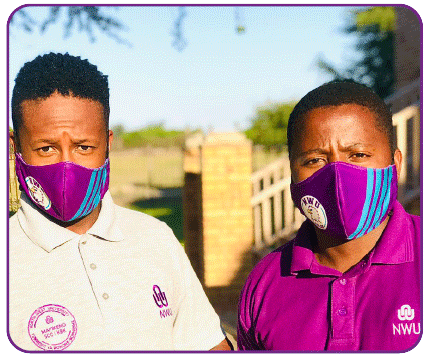
The Student Representative Council (SRC) leaders have their work cut out for them. Their challenge has been to extend their vision of student life and explore creative ways to lead, communicate and engage with students around the restrictions posed by Covid-19.
The leaders elected in 2020 are Siyabonga Hlophe, chairperson of the SRC and the Vanderbijlpark Campus Student Campus Council (SCC); Danielle Giorgi, SRC deputy chairperson and chairperson of the Potchefstroom Campus SCC; and Thabang Tlale, the SRC secretary-general and Mahikeng Campus SCC chairperson.
They all evolved in their leadership roles during the pandemic by using social media to communicate with students, rethinking the format of their events and programmes and helping students adapt to online learning. (Read more)