


Our business model and value chain
Business model
In this section, you can read how we use and transform our capitals to create value for ourselves and our stakeholders through the input, activities, outputs and outcomes in our value chain – all regulated by Senate.
The functions of the NWU Senate are related to our core academic business, which in turn comprises important aspects of our value chain. That is why we present the Senate report in the format of our business model diagram, followed by a discussion of our value chain.
our business model supports
our student life cycle.
Of the 56 425 students enrolled in 2020 (part of our input),
13 048 were first-time entering students.
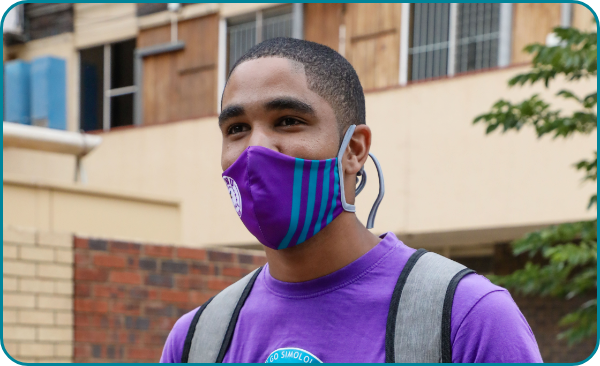


We extended our student support (part of our activities) during the Covid-19 pandemic by providing laptops, data and – where necessary – printed material to help our students continue their studies and finish the academic year successfully. Faculties established call centres for additional student support, and the Centre for Teaching and Learning developed a “keep on teaching and learning” website with focused support pages.
When our students graduate, we want them to be ready to enter the labour market as highly qualified, skilled people (part of our outputs) who are able to contribute to the economy of South Africa (part of our outcomes). That is why we adapted our teaching-learning strategy, focusing strongly on giving expression to graduate attributes such as self-directed and problem-based learning.
