


 Download in another language
The sources of our financial capital are state funding, debt and grants, as well as revenue generated through our operations and investments. We use this capital to provide services and maintain and improve our infrastructure so that we can create value for the NWU and our stakeholders.
Managing our income and spending, as expressed in our annual budget, is the key to the health and stability of our financial environment, which is a prerequisite for achieving our strategic objectives as a unitary institution of superior academic excellence.
All our stakeholders benefit when the NWU’s financial capital is strong. Financial stability enables us to keep our tuition fees within reach of our current and future students and their families. It also means we are able to afford fair remuneration for our staff and reassure our donors and the DHET that we spend their donations and funding wisely, serving the national priorities for higher education.
Although Enabler 4 (financial stability) is the main focus, all our goals and other enablers are also implicated, as we need money to achieve and implement these.

The main risks are uncertainties in the higher education sector (for instance the drive towards fee regulation), and the demand for organisational change (for instance, free education resulting in higher dependency on state funding).
The other top risks in our risk register are also implicated, as we need money for all the activities linked to them. (These are the risks related to academic matters, compliance – for instance with financial laws and regulations – risks relating to student life, IT risks, commercialisation and operational risks.)
Ensure the financial sustainabilityof the NWU
Securing the NWU’s long-term financial sustainability requires us to distribute our resources in a way that supports our core business strategies.
When compiling the annual budget, our budget task team prepares a high-level break-even budget on a cash flow basis. The budget for 2020 was shaped by the realistic prediction of income, translating to expenses that we can “afford”. This means we paid close attention to the calculation of the key sources of revenue, taking into account all the latest, most relevant information available.
As a financial sustainability guideline to steer the NWU towards the ideal combination of income and expenses, we used pre-determined ratios (expenses measured as a percentage of core business income). The 2019 budgeted expense ratios were used as the basis for the 2020 expense budget. The result of the income calculation gave an indication of the adjustment needed in terms of the 2020 expense budget. We then did a three-year forecast, based on the same principles and certain assumptions.
The following ratios guided us:
- Staff cost as a percentage of income
- Operating cost as a percentage of income
- Capital cost as a percentage of income
The Covid-19 pandemic was an unforeseen event and was therefore not included in the 2020 budget. In the next paragraphs we explain our strategy to manage the financial impact of the Covid-19 pandemic during 2020 and in the years beyond (medium term).
How we managed the financial impact of the Covid-19 pandemic
The full financial impact of the Covid-19 pandemic for the NWU and the sector, as well as South Africa, is still unknown. Financial losses will be inevitable and therefore we have adopted a prudent approach that entails compiling different scenarios based on financial risk factors with various assumptions. The aim is to determine the possible financial impact and put a mitigation plan in place to ensure financial sustainability in the medium to long term.
Our cautious wait-and-see approach is also flexible, ensuring that we use the latest information to make decisions. We are continuously updating our financial impact model and mitigation plan as and when more information becomes available, using the model as the baseline in order to guide decision-making, which can be scaled up or down.
We are working from the stance that we need to:
- manage the unknown as and when it occurs.
- support the remote learning mode so as to reduce any possible negative impact on the throughput rate, enable students to complete the academic year successfully and retain students.
- preserve permanent and fixed-term appointments and salaries, also towards the medium to long term.
In the following sections we explain how we financed our strategic initiatives in 2020 and allocated our funds to achieve our goals and implement our enablers.
How we plan to finance our strategic initiatives
The strategic fund is used to invest in our strategy and to ensure all activities and resources are aligned with the strategy and success model of the university. The fund is therefore used to allocate funds for specifically identified strategic projects. Managers request funds for these projects during the budget process and the University Management Committee approve the allocation of strategic funds.
Strategic funds allocated per goal/enabler
20%
Enabler 2
R4 million
Develop best-in-class information and communications technology to support the core business.
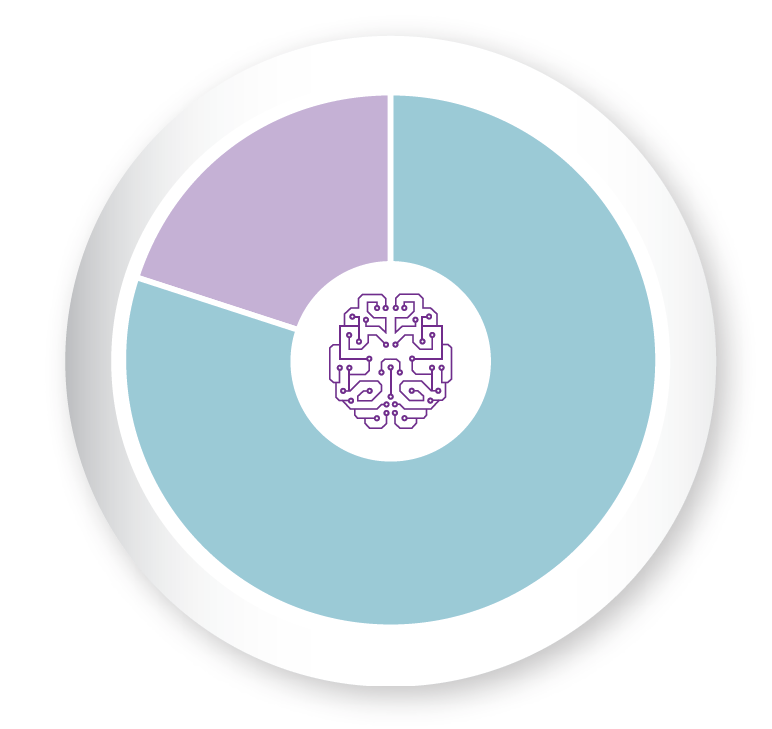
80%
Goal 1
R16 million
Promote excellent teaching and learning and reposition the NWU to attain the size and shape required by the market direction decisions.

Teaching and learning
Goal 1:
Promote excellent learning and teaching and reposition the NWU to attain the size and shape required by the market direction decisions.
- Continuation of Medical School project
- SA Board for People Practices Accreditation project
- First generation study project
- Transformation of learning spaces project
- Work-integrated learning (WIL) and service learning management project


Research and innovation
Goal 2:
Intensify research and innovation.
- Furnishing of new piggery unit
- Seed funding for research hub on Mahikeng Campus
- PhD review


Students
Goal 4:
Develop a clearly differentiated student value proposition.
- Re-branding of NWU sport teams


Improved technology
Enabler 2:
Develop best-in-class information and communications technology to support the core business.
- Developing a Digital Business Strategy (DBS)
- Establishing the Next Generation Digital Environment architecture


Financial sustainability
Enabler 4:
Ensure the financial sustainability of the NWU.
- Staff and business development in the Faculty of Engineering
- Implementing the online enterprise strategy of the Unit for Continuing Education
In the near future: opportunities and challenges in executing our strategy
In response to #Feesmustfall, the annual across-the-board tuition fee increase that the DHET has requested since 2015 has been based on the consumer price index (CPI). The CPI rate is not representative of the increase in cost required to operate a university and we regard the so-called Higher Education Price Index (HEPI) as a better yardstick.
Universities are also grappling with a deficit in real terms in the historical subsidy increase. This deficit is widening because the pace of subsidy increases has been below higher education inflation. Universities would need to adjust their expenditure in line with price changes (as calculated by the HEPI) if they want to maintain the same level of quality and real output.
However, volume changes based on the so-called higher education volume index should also be taken into account when estimating total budgetary requirements, resulting in a higher education budget index. The Bureau of Economic Research analysis of the 2017 – 2019 dataset found that the cost of higher education was higher than headline inflation at the time.
The financial impact of the Covid-19 pandemic in the short and medium term can be added to the challenges that we are facing and will still be facing in the foreseeable future.
The possible impact of risk factors we considered as part of our financial impact model include lower block grant subsidy because of decreased 2020 outputs, lower block grant and earmarked funding available to universities due to the financial difficulties that government is experiencing, the global economic downturn, etc. These were factored into the 2021-2023 rolling budget as part of the mitigation plan to ensure future financial sustainability.
However, there is a limit to what universities can achieve without a sustainable national funding model. Our view is that the NSFAS model is also not sustainable and that, owing to the considerable increase in the number of NSFAS-qualifying students, the model poses a sustainability risk for the higher education sector.
Future outlook: how to maintain financial sustainability
The funding of higher education and the as-yet unknown financial impact of the pandemic have implications for how we go about maintaining our healthy financial position.
We will have to focus on diversifying and optimising our income streams, improving operating cost efficiency and effectiveness, optimising the use of infrastructure and managing our mitigation plan and cash with the utmost care, while reviewing the higher education and NSFAS funding model.
If not, the financial sustainability of public higher education institutions may be jeopardised to such an extent that some may lose their competitive edge in the market and the ability to contribute to the skills and knowledge economy of South Africa.
To prevent this from happening at the NWU, we intend to participate actively in the modelling of the future funding design. We remain committed to working with the DHET to not only ensure a well-functioning and sustainable NWU, but also help safeguard the stability and sustainability of the South African higher education sector.
"We are committed to maintaining financial stability, and therefore it will become increasingly important to generate our own income, review activities that are not financially viable and focus on disciplined cost."

STATEMENT ON BORROWINGS
See how we explore, expand and evolve
As the Covid-19 pandemic continues to affect our lives in the most unprecedented ways, the university has launched the NWU Covid-19 Response Fund.
“The objectives of the fund are to support the students with laptops and other devices; and offer support to staff, students and the communities around our campuses with necessary equipment and other needs,” says NWU vicechancellor Prof Dan Kgwadi.
The Covid-19 campaign launch was preceded by a survey conducted among students which found that many of them did not have the necessary devices, network connectivity and/or electricity.

This is the report of the chairperson of the Finance Committee of Council and the Executive Director: Finance and Facilities.
The purpose of this report is to present a summary of our financial results for 2020 and to provide information about the following:
- Budgeting and budgetary control processes
- Overview of financial achievements
Budgeting and budgetary control processes
The Finance Committee of Council approved the budget process and timeline for the 2020 budget in May 2019.
We used an interactive budget process. All levels of management participated actively in compiling the budget (per planned activity) for the next year and took ownership of the process. Where possible, we applied zero-based budgeting principles.
The main focus within each executive portfolio during the budget process was to "cost" their annual performance plan for 2020, thus putting an R value to their plan. This plan needed to be aligned with the managers' portfolio strategies, the NWU strategy and the NWU Annual Performance Plan (APP).
Budget discussions took place on various management levels. Executive managers also had the opportunity to discuss their portfolio budgets with the budget committee task team. This ensured that the detailed budgets were aligned with the NWU strategy and that managers paid attention to equitable resource provision. It also enabled us to identify possible risks and concerns.
The high-level budget, taking into account the approved APP, the viability and sustainability indicators and other financial information available, was used as a budget framework during the budget process.
Financial overview
Please click here for the full financial overview and here for a summary of how we added value to the economy and reached our financial goals.
