NWU value chain
Value creation through adapting, exploring, expanding and evolving
Our 2020 value-creation story was about empowering people to discover their strengths and harness their skills to thrive amidst the new normal brought about by the Covid-19 pandemic.
In 2020, it was about setting the example for our stakeholders; taking them along on a challenging but exciting journey, we co-created value with them by adapting, exploring , expanding and evolving with us.
In other words: we invested in them because we believed in their potential (our input), we created value for them by exploring new possibilities and expanding our vision so that they could continue to grow and flourish (our activities), enabling them to evolve into critical thinkers (our output) and eventually enter the labour market and society as value creators themselves (our outcome).
Throughout our value chain, we access, use and transform our capitals. For instance, as part of our input, we use our sources of income (financial capital), our skilled staff members (human capital), buildings and equipment (manufactured capital) and our academic programmes (intellectual capital) to create value for our students (human capital). Faced with the Covid-19 pandemic in 2020, however, we had to explore new ways of using these resources to save the academic year.
We also had to expand our vision and embrace exciting new possibilities in executing our daily activities. For instance, we had to find novel ways – mostly through online activities – to move forward with our community engagement initiatives. As a result, we continued to build and maintain good relationships with with people and organisations in our environment, thereby increasing our social and relationship capital.
In 2020 we applied much of our research results (intellectual capital and part of our output) to find solutions to problems posed by the pandemic, thereby changing – and often saving – lives and creating a better future, which is part of our outcomes.
In the following discussion of our value chain, you will see how we draw on our various capitals as inputs and, through our activities, convert them to outputs and outcomes.
Click on the tabs below to read more about our value chain.
- Input:
Invest in people’s potential - Activities:
Explore and expand for continuous growth - Output:
Evolve to become
critical thinkers - Outcomes:
Enter society as value creators
Input:
Invest in people’s potential
Our students
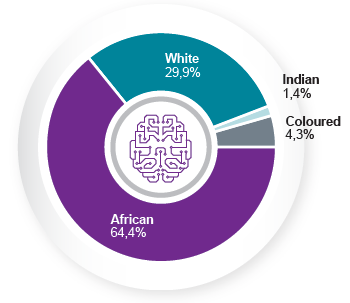
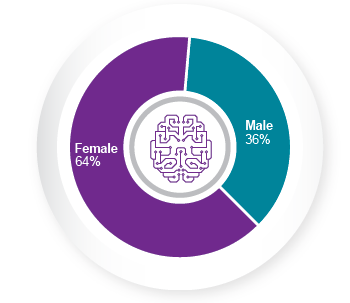
Our student body is an invaluable input into our value chain. The image below shows the composition and size of the student body in 2020:
Student recruitment
We adapted our response to stakeholder needs and expectations in 2020 in order to curb the spread of the coronavirus. Owing to the pandemic and lockdown, we could not pay physical visits to schools or host other recruitment events such as open days and sport events. As a result, we had to explore and introduce new student recruitment interventions.
Broadening access to studies for students of the NWU
UnivPrep is a one-year programme offered as a Senate-approved short learning programme and enhances access to specific degree programmes at the NWU. Each year, approximately 45% of successful UnivPrep participants become eligible to apply for formal degree studies.
Financial aid
In 2020, the NWU’s financial aid offices administered R2,4 billion. This mostly comprised government funding (and a limited amount of other external funding), as well as a substantial amount from the university’s own funds.
Government funding for bursaries amounted to R1,9 billion (81% of the total amount allocated for of bursaries, including Funza Lushaka bursaries administered by NSFAS). A sum of R107 million was outstanding from NSFAS at year end which, once received, will increase government’s contribution to 85% of the total amount for bursaries.
We contributed R211 million to student bursaries, which is 8% of the total funds allocated for financial aid. By supporting academic performance and needy students, we increase our throughput rate and the value of our human capital and demonstrate our commitment to social justice and an ethic of care.
As an example of how we sought to explore ways to adapt to the ‘new normal’ during 2020, we had to expand our financial aid to students even further. We did this by providing 3 534 laptops with a value of R19,8 million and data worth R12,4 million so that students could continue their studies online and finish the academic year successfully.
Student development and support
We continued to offer focused academic support, mainly online, enabling students to achieve academic success. (More information about how we increased student success is available here.) Where the different lockdown levels during the pandemic allowed us to reach out with other forms of assistance, we also offered non-academic support services such as psychosocial, health, sport and arts and cultural services.
Our staff
Another important input into our value chain is our staff complement. In 2020, we had a total of 4 140 permanent staff members, compared to 4 077 in 2019.
The following table shows how our complement of permanent academic staff compares with that of other South African higher education institutions (based on 2019 audited HEMIS data):
| Institution | Total |
| University of South Africa (Unisa) | 1 866 |
| North-West University | 1 575 |
| University of Johannesburg | 1 330 |
| University of KwaZulu-Natal | 1 249 |
| University of Pretoria | 1 224 |
| University of Cape Town (UCT) | 1 184 |
| University of the Witwatersrand (Wits) | 1 204 |
Staff development and support
The NWU's permanent staff comprise 1 632 academics and 2 508 support employees. We consider them an invaluable part of our human capital and invest continually in providing the support and development they need to excel.
When we moved to online learning in 2020, we explored new ways of supporting our staff, for instance by expanding our suite of training courses. For example, we introduced several webinars to empower our academics to master techniques for successful online teaching.
Other important tools for developing our staff are academic promotions and awards programmes. We also place great emphasis on the holistic wellbeing of our employees. You will find more details about this aspect of staff development in the section on how we perform against our strategy.
Academic promotions
The annual academic promotions process is a recognition programme that builds academics for the future, meaning academics who share the NWU’s values and ethos as a unitary institution of superior excellence and, more broadly, contribute to the realisation of the National Development Plan and subscribe to the Pan-African ideal.
The principle underpinning academic promotions is the importance of creating mutual value both for the academic and the NWU.
Altogether, 102 academic promotions were approved in 2020, on par with the promotions approved in 2019.
From 2019 to 2020, black academics’ share of promotions increased by 8,3% overall. This translated to increases of 2% in black promotions to associate professor, 2% to professor, 1,92% to senior lecturer and 3% to lecturer
Caring for our staff
One of the greatest challenges we face in recruiting and retaining staff is the competition among South African universities for academic talent. Our response to this challenge, which relates to risk cluster 3 (academic matters) revolves around ensuring we keep our employees engaged by creating an environment that is underpinned by an ethic of care.
This encompasses the biopsychosocial and spiritual wellbeing of our employees. As many of them worked from home during 2020, we had to expand our thinking and explore innovative ways to support them through our Wellness programme. By conducting most interventions on virtual platforms, we proved our readiness to adapt and evolve.
These interventions centred on equipping line managers and their teams to adapt to remote working and remain resilient in the face of adversity. For instance, managers received online management coaching, empowering them to deal with difficult situations involving employees and to promote employee wellness as part of their management responsibilities.
Funding
Research funding
The limited external funding available in 2020 for research and innovation was put to good use:
| Awarded | |
| Freestanding bursaries | R25 499 796.00 |
| Freestanding bursaries for travel | R21 53 |
| Block grant bursaries | R3 210 000.00 |
| NRF postdoctoral awards | R2 887 500.00 |
| Chairs awarded | R20 401 401.62 |
| Research grants awarded | R17 919 833.16 |
| TOTAL awarded received from NRF | R69 940 068.94 |
| TOTAL unspent funds in 2020 | R7 551 273.98 |

Funding for technology transfer and innovation
Our Technology Transfer and Innovation Support Office established a R4 million pre-seed fund in a co-funding partnership model with the SA SME Fund, a collaboration between government, labour and business. The pre-seed fund provides grants of up to R500 000 for qualifying early-stage technology development projects and complements the Technology Innovation Agency’s Seed Fund programme.
As traditional sources of funding for technology transfer were either frozen or reallocated, the Technology Transfer and Innovation Support team concentrated their efforts on building new funding relationships and channels to external funding.
In exploring new paths, we made a special allocation of strategic funds available for key Covid-19- related projects.
International funding
The table below shows the international funding each faculty received during 2020..
| International funding for research | Actual as confirmed from faculties |
| Faculty of Economic and Management Sciences | R29 700.00 |
| Faculty of Education | R371 981.67 |
| Faculty of Humanities | R4 626.72 |
| Faculty of Engineering | R1 853 091.37 |
| Faculty of Health Sciences | R4 954 131.49 |
| Faculty of Natural and Agricultural Sciences | R7 623 476.49 |
| Grand total | R14 827 754.30 |

Activities:
Explore and expand for continuous growth
See how we explore, expand and evolve
The coronavirus pandemic has made it necessary for the NWU to explore new ways of conducting our core business.
We have for instance embarked upon remote learning, which includes online and distance learning. Staff and students have embraced the new way of teaching and learning, thereby enabling them to expand their horizons and evolve to become even more than they were before.

Teaching-learning activities
The world of work is changing fast and our academic offering must keep pace. Once again, this challenges us to explore, expand and evolve.
This goes beyond simply adapting or renewing the specialised and technical content and delivery of programmes but, equally important, incorporates transferable skills and flexible mindsets.
For example, our environmental scanning shows that the top five skills in demand by 2025 will be analytical thinking and innovation, active learning and learning strategies, complex problem-solving, critical thinking and analysis, and creativity, originality and initiative. These are the kinds of skills we are focusing on as we strive to ensure our academic offering remains relevant for the future.
We also continue with academic programme alignment to ensure external compliance and enable us to provide academic programmes of comparable quality across all our campuses.
More information is available in the section on how we performed against our strategy and succeeded in increasing our intellectual capital.
Increasing student access and success
Peer mentoring, reading development and supplemental instruction are some of the tools our Centre for Teaching and Learning (CTL) uses to enable student retention and success.
These interventions contribute to the consistently high student retention rate at the university, especially among first-time entering students who, if not sufficiently supported, may be more at risk of dropping out than senior students. More information about what we do to assure student success and retention is available here.
Promoting continuing education
Lifelong learning is becoming increasingly important in the labour market as employees and entrepreneurs at all stages of their careers come under increasing pressure to renew and diversify their skills. Our Unit for Continuing Education (UCE) has a diversified portfolio of short courses that is helping to build a skilled, agile and adaptable workforce for South Africa.
Focusing on improved growth and profitability, we continue to expand our offering by developing new products.
During 2020, 3 924 persons participated in 194 short course events combined for UCE and NWU Business School.
The distance learning market is poised for growth and the UCE has been hard at work extending the short course offering to this market through an online offering. Thus far, eight pilot courses have been earmarked for online learning and we hope to see further developments around this in 2021.
In the spirit of exploring, expanding and evolving, our intention is to deploy an innovative and effective online learning ecosystem, develop high-quality multimedia content, and continually implement emerging technologies.
Improving graduate employability
The NWU Career Centre remained functional and productive during 2020, using online platforms to sustain its employability offerings during the Covid-19 health crisis. Some of the systems and tools that enabled the centre to keep operating were the Career Zone jobs portal, the first virtual career fair, social media platforms and the centre’s websites.
While exploring new pathways, we accelerated the drive to automate career services. We concluded revised service level and data processing agreements to streamline data integration and allow easy interaction between employers and NWU students.Click here for more information on how we improved graduate employability.
Focusing on academic and professional development
Excellent university teachers are fundamental to student success, which is why we emphasise the professional development of our academics. Some of the professional development initiatives run at the NWU are the induction programme for new academics, the Teaching Excellence Awards, activities focused on the scholarship of teaching and learning, and the annual Teaching and Learning Conference.
Research activities
Most of our research activities were conducted in our 54 research entities, consisting of 11 research chairs and 43 research entities. These comprised five centres of excellence, 11 research units, 14 research focus areas, 12 research niche areas, seven hosted entities and one commercial research unit.
Regular external and internal evaluations of our research entities ensure these continue to create maximum value for our stakeholders. The external evaluations were postponed in 2020 but the internal evaluations went ahead, focusing on quality, productivity, sustainability and good management practices.
In another example of how we worked to expand our horizons, we took our PhD review online, resulting in a self-evaluation report and improvement plan.
The current NWU research landscape can be seen on the NWU website.
Output:
Evolve to become critical thinkers
Teaching learning output
Our contact success rate has stayed over 85% for the past three years. The contact undergraduate degree graduation duration factor stood at 1,12 in 2020, lower than in 2019, and indicates that most students complete their degrees in the minimum time.
The student-to-academic staff full-time equivalent (FTE) ratio is 29,17: 1 (31,93: 1 for 2019), meaning that one academic staff member is available for every 29,17 full-time equivalent students.
In the case of the first-time entrants, the dropout rate for contact degrees decreased from 10,8% in 2019 to 9,1% in 2020, and remains low in comparison to sector norms. The impact of the Covid-19 pandemic is evident in these rates.
The following graph shows the number of graduates per field of study for 2019 and 2020.
The following table shows how our number of graduates compare with those of other South African higher education institutions (based on 2019 audited HEMIS data):
| Institution | Total |
| University of South Africa | 48 906 |
| Tshwane University of Technology | 16 871 |
| North-West University | 14 961 |
| University of Johannesburg | 14 099 |
| University of Pretoria | 12 651 |
Teaching and learning awards
The NWU teaching and learning excellence awards are held annually to acknowledge and celebrate the exceptional output of our academic staff in teaching practices and innovation. Awards are presented in three categories: Emerging Teaching Excellence Award, Teaching Excellence Award and Distinguished Teaching Excellence Award.
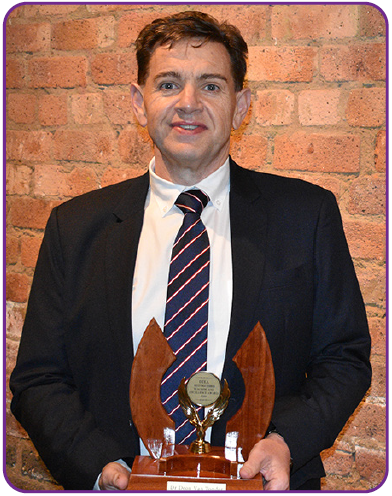
During a virtual awards event on 12 March 2020, Dr Deon van Tonder of the Faculty of Education received the coveted award for distinguished teaching excellence.
Research output
Our peers in the scholarly community are the best judges of the quality of our research and innovation output. They give their stamp of approval by publishing our articles in peer-reviewed journals and inviting our academics and postgraduate students to give presentations at accredited conferences. Master’s and PhD students graduated is another important yardstick of quality.
The following table confirms that the quality and quantity of research at the NWU continues to improve.
| Research output 2019 (intellectual capital) | |
| Journal articles | 1 233,18 |
| Conference proceedings | 118,75 |
| Books and chapters | 189,22 |
| Total article equivalents published | 1541,15 |
| Master's degrees conferred | 798 |
| Research master's | 574,87 |
| Research master's weighted | 574,87 |
| Doctoral degrees conferred | 314 |
| Doctoral degrees weighted | 942 |
| Total weighted research output | 3 058,02 |
| Postdoctoral fellows | 231 |
| Publication units per permanent academic staff member | 0,8 |
Read more about our research output in the section on how we create value against our strategy, thereby strengthening our intellectual capital.
Research and innovation excellence awards
We celebrate our researchers’ hard work and exceptional output through our annual research and innovation excellence awards, held towards the end of the academic year.
At the 2020 celebration which was a virtual event owing to the pandemic, Prof Marius Nel from the Faculty of Theology was named the most productive senior researcher, while Prof Ruan Kruger from the Faculty of Health Sciences was the most productive emerging researcher.
Prof Leenta Grobler and Dr Henri Marais from the Faculty of Engineering received the award for innovation impact.

Outcomes:
Enter society as value creators
Outcomes: Enter society as value creators
The first links in our value chain are our inputs and activities, as discussed in previous sections of this report. The next stage of the value chain consists of our outcomes, which are intended to create longer term value.
This future focus means that sustainability is an integral element of our outcomes. After we have taken care of immediate and medium-term needs, there must be sufficient capitals left to use for future value creation.
Financial stability is a good example of an outcome that supports our sustainability. When the NWU is financially stable, we are in a position to generate other outcomes, such as delivering skilled graduates to enhance the knowledge economy of the country.
By skilled graduates, we mean graduates equipped for the digital era and the Fourth Industrial Revolution, both technically and in terms of skills such as critical thinking and collaborative problem solving.
Another important outcome is finding solutions to real-life problems that leverage our research and innovation results.
The third leg of our core business, namely community engagement, also creates outcomes by empowering people to improve their lives in a sustainable way.
PROF DAN KGWADI
CHAIRPERSON OF SENATE
“Our priority throughout the Covid-19 crisis has been to support students to continue their studies through the modalities best suited to these extraordinary circumstances.
“Similarly, when it comes to our staff, the university’s planning efforts have focused on keeping them safe and empowering business continuity from their home environments.
- Prof Robert Balfour, deputy vice-chancellor for teaching and learning
See how we explore, expand and evolve
During the hard lockdown, the North West Department of Health (NWDoH) approached a team of NWU researchers for assistance in the fight against the pandemic.
Prof Petra Bester coordinated a formidable team of NWU academics, researchers and experts in advising and assisting the department.
Their task was to predict the course of the virus in the province (epidemiological projections) so that the provincial government can spread resources optimally. They also created a centralised database to identify areas where symptoms are evident for testing and screening purposes.